The Humane Society of the United States

"HP dumps WebOS on open source world"

December 09, 2011 By Ted Samson | InfoWorld

A Comment...

I'm glad HP took my advice, though it was kind of a no-brainer.

I've read a number of positive things about webOS from developers working with it. Unlike in the market-driven world of commercial software, webOS only needs to do something - anything, especially well to be adopted in whole or in part by the purely innovation-driven Open Source community.

Since webOS is based on the Linux 2.6.24 kernel, I would expect future webOS development to probably lean towards being another Open Source alternative to Android on small devices. Maybe Google will adopt it if there's something in it they can use.

Commercial software has become so dominated by market forces to the exclusion of functionality, quality, reliability and value, that the industry seems to be coalescing into two camps -- Open Source, where most of the R&D innovation occurs; and Commercial, where they assemble those innovations into commercially viable packages and market them.

Businesses and individuals that want finished products and have more money than time or computing skill, buy commercial software and support. Businesses that need specialized mission-critical software that gives them a competitive edge over their competition or companies and individuals with more time and/or computing skill than money, choose Open Source for some or all of their operations.

Linux (and perhaps webOS) is the Lowes or Home Depot of software whereas Microsoft is the Ethan-Allen Home Furnishings.

How much you want to bet Ethan-Allen's manufacturers have long-standing accounts at Lowes and Home Depot?
  

Labels: , , , , , , , ,

"Ex-Amazonian urges Google to sample Amazon's secret sauce"

October 12, 2011 | by Ted Samson | InfoWorld
A Comment...

Amazon could be more innovative like Google and Google could be more organized like Amazon.

Sounds like they both need to make in-depth information about their respective products easier to find by their developers and support staff. Google is the undisputed master of keyword search so they have half the problem solved. The other half is continuing to perfect their structured data where the right answer can be located much more quickly than exploring a lot of hits from keyword searches.

Because new hires learning the products are actively engaged in assimilating new information, their pattern-matching skills are in overdrive. That makes them great at recognizing similarities that can be recoded into a single routine and put in libraries to be reused.

Just because it's in a library though, doesn't mean it will be used. As much, and often more, effort is thus put into cataloging, thorough hyperlinking and other mechanisms to make all that information a few clicks away.

To be reusable, code must be 100% reliable, 200% documented and 300% easier to use. If it's not, developers will write their own.

Amazon's "platform oriented culture" has (hopefully) created a new profit center for them to keep paying the bills since they don't have Google's massive advertising revenues and their founding product -- book sales -- has a bleak future.

Google's "product oriented culture" keeps them innovative while, so far at least, advertising pays the bills. Most of their eggs are in that advertising basket though. Leveraging their massive infrastructure, creative talent and socially responsible policies to provide large-scale computing resources provides another source of revenue (and makes the world a better place at the same time).
  

Labels: , , ,

Google App Engine Support


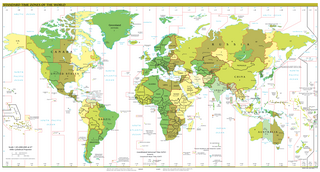
Why Google's $500 a month Enterprise Support for App Engine mysteriously takes a 6 hour break from 6pm to midnight (PST) might be explained by looking at a world timezone map compared to a map of Google offices around the world.

Do Google's office locations have any relation to the concentration of App Engine users? If so, this may be the least disruptive period since most of the 6 business hours affected are over the Pacific. Are there many (any?) App Engine users in Japan, New Zealand, Australia or surrounding areas?

On the other hand, it could be to provide an exclusive window for third-party support from companies like Cloud Sherpas.

But then again, maybe running an around-the-clock technical support help-desk operation is just not what Google does best.

Google is, after all, an innovator.

Google creates leading-edge software systems. Their culture is one where everyone is thought of as a superstar... or an aspiring one. Google hires and promotes self-motivated, creative, impatient, out-of-the-box personalities.

While the best help desk people are compassionate, patient, methodical, thorough personalities that enjoy the satisfaction and confidence that comes from knowing the answers (Most of the the time. If they could just get the caller to ask the right question.)

It would make sense to outsource the help desk... but the logistics can never work.

How can a third-party keep its staff up-to-date with almost daily changes?

We are rapidly coming to expect software problems, particularly online software problems, to be fixed in a matter of days (or hours). Though many fixes to application software are internal and require no help desk procedure changes, most fixes in APIs like those for App Engine will at least alter the "best" way to do things if not the "only" way.

No, the only way Google can best its rivals for support is to automate it.

Google is just going to have to do what programming language designers have been trying to do since Grace Hopper developed COBOL... They're going to have to create a truly self-documenting language.

Be it Go, Dart, or something to come that barely resembles a "language", Google needs a system that communicates how to use it automatically from the code itself.

We already have IDEs that provide syntax and other documentation to the programmer. Maybe there could be deeper levels (in a wiki?) that are automatically generated from the code itself and accessible from outside the IDE. These would then be enhanced with feedback from developers, help desk personnel and users.

I expect such self-documenting systems exist... somewhere.

If anyone can bring them to world... Google can!

Resources

Labels: , , ,

"Google Antitrust Probe to Shed Light on Search"

Fri, September 16, 2011, CIO, By Grant Gross
A Comment...

Looks like there's a coordinated "War on Google" going on.

I just hope Google can hold out till after the next election. If the Democrats win big, these malicious attacks on the most successful American business today will cease. If they don't, everyone at Google should probably just cash out.

The ultra-right has a death-grip on Congress and has proven, without exception, that they will destroy anyone and anything in order to insure that that black man is not reelected. (Google was Obama's #5 top campaign contributor in 2008 according to OpenSecrets.org.)

The current congress cannot be dissuaded from its crusade. To try is a waste of effort.

The only way to take back our country is to vote our conscience.

The disorganized Democrats are a long way from ideal, but history has shown us in horrifying clarity what a well-organized, single-minded group can do to bring the world to the brink of destruction.

Some may complain that my comments are off-topic for this forum. That compartmentalization of our lives is exactly how we got into this mess... refusing to recognize how interconnected everything is.

Who is running the government matters.

At no time in our lives has it been more important to study the issues and the people who are or want to be the people telling us what we can and cannot do.

At no time in our lives has it been more important to stand up to our coworkers, our employers, our friends and stop this insanity.
  

Labels: ,